 ultimate-guide
7 Metal Fabrication Requirements for Public Infrastructure
Quick Summary
Metal fabrication for public infrastructure means cutting, forming, welding and assembling steel into components for bridges, transit, water facilities and government buildings. Public work requires documented traceability, qualified welding procedures and dimensional inspection that private jobs often skip.
- Each heat of steel needs a mill test report traceable to its specific member.
- Every joint type needs a qualified WPS backed by a PQR, or the shop cannot weld it on a public job.
- Confirm the shop's AISC certification covers the specific work category and facility.
- Specify the corrosion protection and coating system before the first weld is made.
- Ask which connections are inspection-critical and which NDT method and acceptance criteria apply to each.
Table of Contents
- What Counts as Metal Fabrication for Public Infrastructure
- Structural Steel Fabrication Standards You Will Be Held To
- Metal Fabrication for Government Projects: Procurement, Compliance and Inspection
- Infrastructure Welding Requirements and Lifecycle Maintenance
- Frequently Asked Questions
7 Metal Fabrication Requirements for Public Infrastructure
Last Updated: November 4, 2026
What Counts as Metal Fabrication for Public Infrastructure
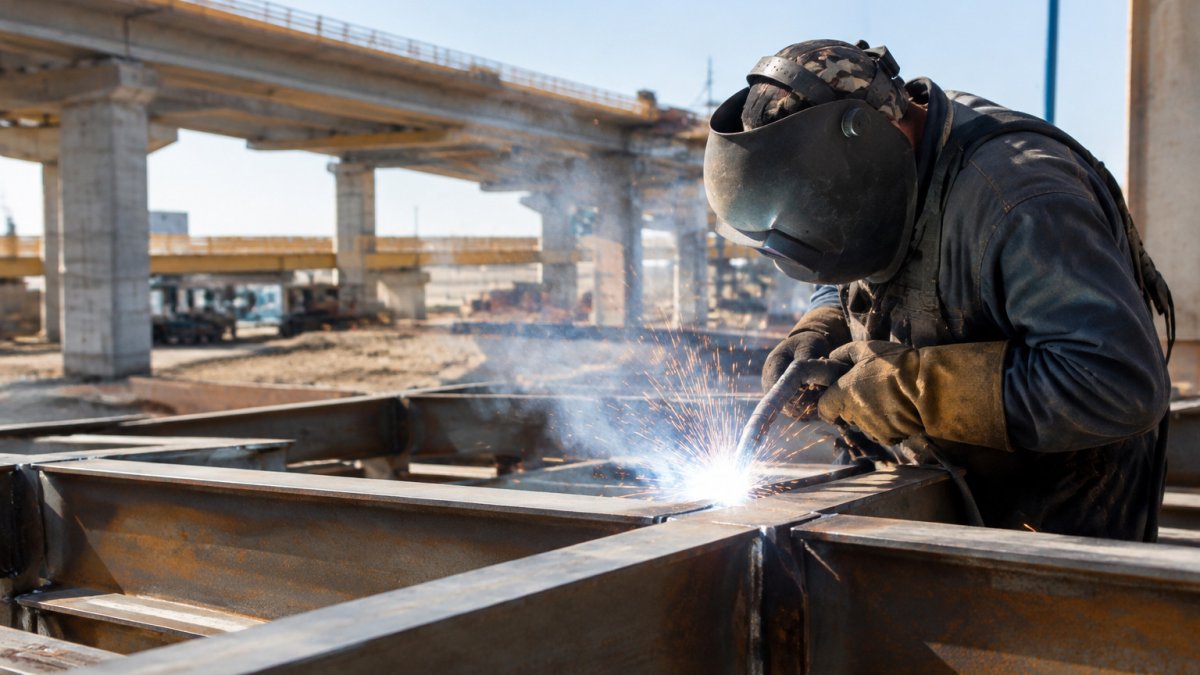
Metal fabrication for public infrastructure means cutting, forming, welding and assembling steel and other metals into components that bridges, transit systems, water facilities and government buildings depend on. Owners often assume a shop that does good commercial work can handle a public contract, but public work carries documentation, traceability and inspection demands that private jobs often skip.
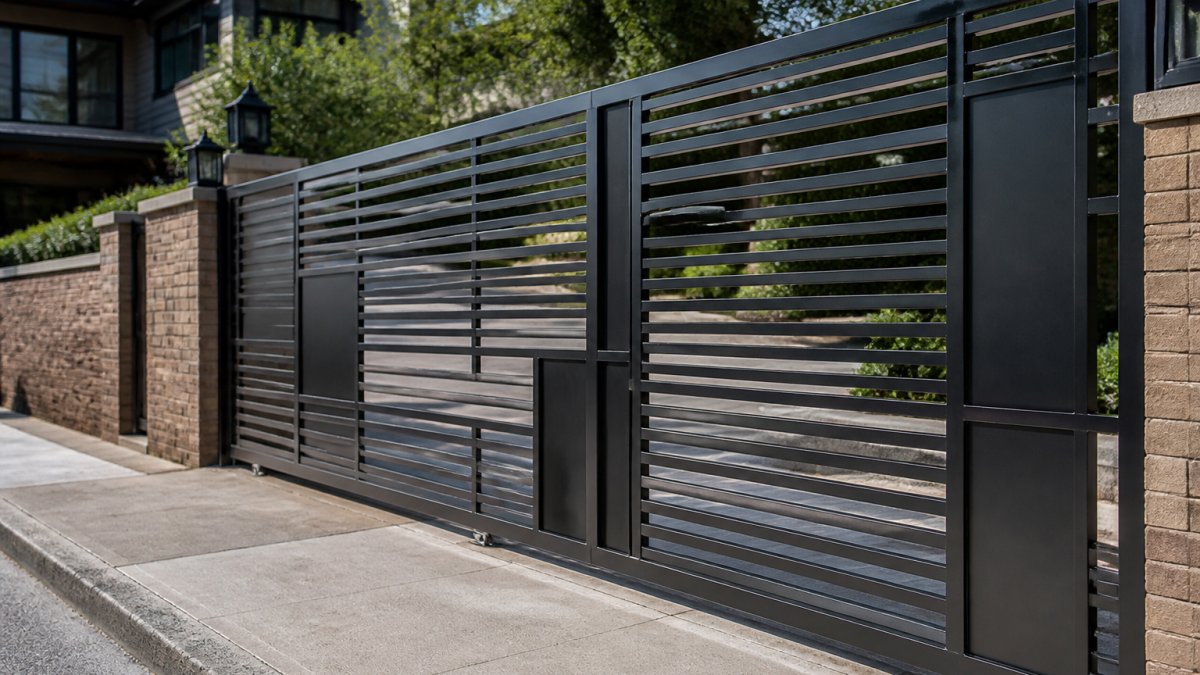
Public infrastructure fabrication covers structural members, connections, railings, gates, canopies, brackets and water control structures. Each carries load or exposure over decades, so tolerances and material records matter as much as the weld itself.
Structural Steel Fabrication Standards You Will Be Held To
Structural steel for public work is judged against published consensus specifications, and the fabricator must prove conformance in writing. The three on nearly every public structural package are AISC 360, AISC 303 and AWS D1.1. ASTM standards govern the material itself, most commonly ASTM A992 for wide-flange shapes and ASTM A36 for plates and miscellaneous members.
In practice, the fabricator must hold and produce four categories of records:
- Mill certifications per heat. Every heat of steel gets a mill test report showing chemistry and mechanical properties, traceable to the specific member.
- Welding procedure specifications (WPS) and procedure qualification records (PQR). Each joint type and thickness combination needs a qualified WPS backed by a PQR. A shop that cannot produce a PQR for a given joint is not qualified to weld it on a public job.
- Welder qualification records. Each welder must be qualified under AWS D1.1 for the process and position being used, and those records must be current.
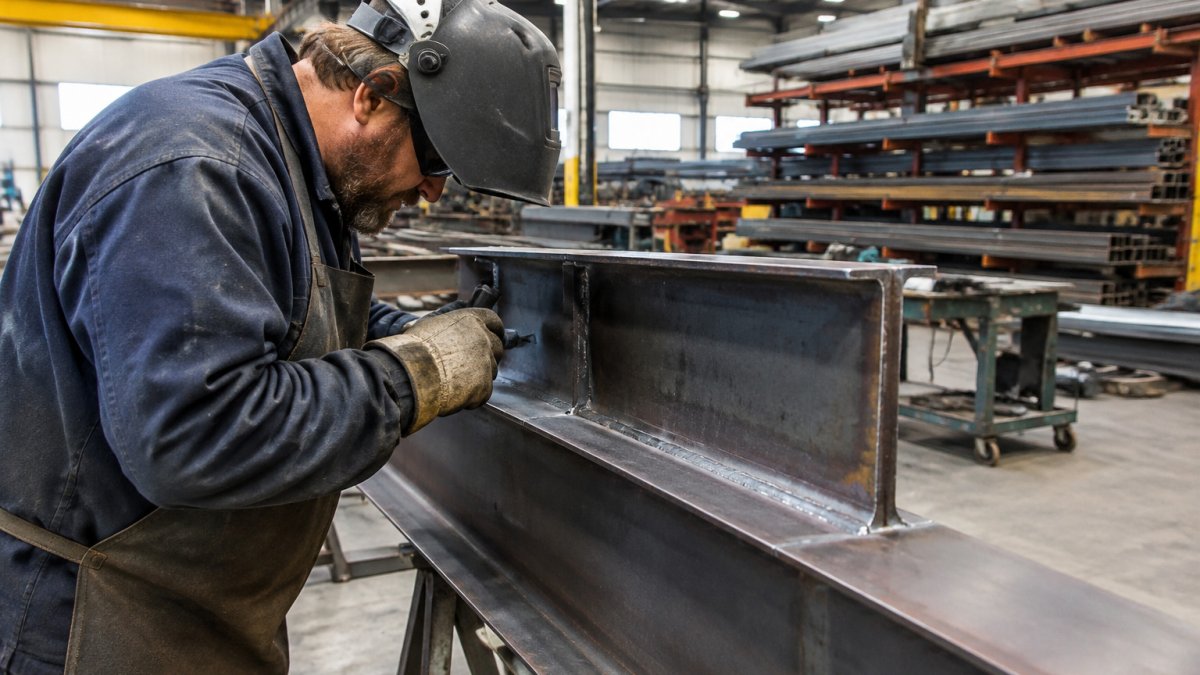
- Dimensional inspection reports. AISC 303 sets the fabrication tolerances, and the shop should measure against them before a member leaves the floor.
Tolerances are where public work diverges most sharply from commercial work. A member that is out of square or out of plumb will not seat on site, and the field fix is expensive and slow. Ask any prospective shop how it verifies dimensions before shipment and whether it documents that verification. Some shops verify overall length and camber but skip cross-sectional squareness and hole location, which are dimensions that can cause fit-up problems in the field.
Watch out: A shop can hold an AISC certification and still be working outside the scope of that certification, so confirm the certification covers the specific work category and the specific facility where your members will be fabricated.
For public structural work, also confirm whether the project requires AISC Certified Fabricator status. Many public owners and their engineers now specify it, and a shop without it may be non-responsive even if its bid is lowest. The documentation burden is real, but it is how a public owner gets a structure that can be inspected, audited, and maintained for decades.
The article lists four categories of records a fabricator must produce for a public structural job.
| Record | What it shows | Standard or detail |
|---|---|---|
| Mill certifications | Chemistry and mechanical properties per heat | Traceable to specific member |
| WPS and PQR | Qualified welding procedure for each joint | Backed by a PQR |
| Welder qualification | Welder qualified for process and position | Under AWS D1.1, must be current |
| Dimensional inspection | Member measured against fabrication tolerances | AISC 303 |
Metal Fabrication for Government Projects: Procurement, Compliance and Inspection
Government projects add a procurement layer that private work rarely has. Bids often require proof of prior public work, a documented quality plan and evidence of insurance and licensing. Federal projects can also carry domestic sourcing requirements for steel, so confirm the origin of raw materials before you bid.
Inspection is where many shops fall short. Plan for third-party inspection, keep dimensional and weld reports organized, and understand which local permits apply to your site. Verifying a fabricator's documentation directly is advisable for public contracts rather than relying on reputation alone.
Infrastructure Welding Requirements and Lifecycle Maintenance
Welding on infrastructure is judged over a service life measured in decades, not at handover. That changes both how welds are qualified and how the finished assembly is protected.
On the welding side, AWS D1.1 governs procedure and welder qualification and defines acceptance criteria for weld discontinuities (AWS D1.1/D1.1M:2025-AMD1: Structural Welding Code - Steel). Inspectors commonly apply nondestructive testing to a sample of welds rather than every weld: visual inspection (VT) is always performed, ultrasonic testing (UT) is common on complete-joint-penetration groove welds in tension, magnetic particle testing (MT) is common on fillet welds and surface discontinuities, and dye penetrant testing (PT) is used where magnetic methods do not apply. The fabricator should be able to tell you which method applies to which joint and what acceptance criteria the project specifies, because a weld that passes visual inspection can still fail UT.
Corrosion protection is the other half of lifecycle performance, and it should be specified before fabrication. Hot-dip galvanizing per ASTM A123 is the default for exposed structural steel in many public applications and typically provides decades of protection, with actual service life depending on coating thickness and environment. For bridges and other structures where repainting is costly, three-coat systems (zinc-rich primer, epoxy intermediate, polyurethane topcoat) are common, and the shop's surface preparation standard (typically SSPC-SP 6 or SSPC-SP 10) drives how long the coating lasts. A coating applied over poorly prepared steel will fail early no matter how good the paint is.
This is the part most buyers overlook: the cheapest fabrication bid is often the most expensive component over its life. A member fabricated with proper edge preparation, correct weld detailing to avoid crevices and water traps, and a specified coating system costs somewhat more up front but pushes the first major maintenance interval out by years. Municipalities and public owners increasingly evaluate bids on lifecycle cost rather than first cost for exactly this reason.
Ask the fabricator three questions before award:
- Which connections are inspection-critical, and what NDT method and acceptance criteria apply to each?
- Which surfaces will need recoating, on what interval, and what surface preparation will that recoating require?
- What detailing choices (drainage, weep holes, seal welds versus intermittent welds) were made to reduce long-term maintenance?
Watch out: Galvanizing and some coating systems are not compatible with certain weld details or with steel chemistry outside the galvanizing range, so confirm the coating decision before the first weld is made rather than discovering the conflict after fabrication.
Frequently Asked Questions
What are the primary metal fabrication standards for public infrastructure?
Most public infrastructure work in the United States is built to structural steel standards published by the American Institute of Steel Construction and welding requirements from the American Welding Society, specifically AWS D1.1 for structural steel. Government agencies often add their own specifications on top of these, covering material certifications, weld inspection levels and fabrication tolerances. Before bidding, review the project specifications closely, since the required welder qualifications and inspection scope vary by owner and by the type of member being fabricated.
How do government regulations affect metal fabrication for public projects?
Federal-funded projects typically fall under Buy America requirements, which mean the steel and iron used must be produced in the United States, with mill certifications documenting origin. Fabricators also need documented quality control procedures and qualified welding personnel. Compliance paperwork is part of the deliverable, so shops that cannot produce traceable material records and inspection reports often struggle to win public contracts.
What is the difference between structural steel and custom metal fabrication for infrastructure?
Structural steel fabrication produces standardized members such as beams, columns and connection plates that are designed to carry defined loads. Custom metal fabrication covers items like railings, gates, canopies and water control components that are designed for a specific site. Both can appear on the same public project, but custom work often needs more design coordination and dimensional verification before fabrication begins.